


Empowering Doctors for Comprehensive Doctor Against Addiction (DaAD)
Introduction:
Doctor Against Addiction (DaAD) is an initiative of the Asian Coalition of Health Empowerment (ACHE) aimed at empowering healthcare professionals to address addiction and harmful behaviours through harm reduction. Recognizing the far-reaching consequences of addiction across physical, psychological, and social domains, DaAD focuses on educating doctors about addiction prevention and management. By advocating a compassionate approach, DaAD encourages doctors to engage patients in open dialogues, reduce stigma, and support harm reduction strategies, including the use of novel safer alternatives for smoking cessation. Through collective efforts with policy advocates and public health stakeholders, DaAD strives to foster an inclusive approach to addiction prevention, promoting healthier and safer choices for all.
Increased Awareness: Empower doctors to understand addiction’s broad social and personal impact.
Enhanced Patient Care: Encourage addiction screening in routine medical assessments.
Behavioural Influence: Instil responsibility among doctors to take an active role in addiction prevention.
Community Engagement: Motivate doctors to become advocates, participating in community initiatives for addiction awareness.
Importance of DaAD:
The ‘Doctor Against Addiction’ (DaAD) prioritises harm reduction over abstinence, addressing the reality that some individuals may continue addictive behaviours despite known risks. By focusing on mitigating adverse effects, DaAD promotes a non-judgemental, inclusive approach that considers addiction as a manageable health issue rather than a moral failing. The campaign symbolises a commitment by healthcare professionals to promote harm reduction and improve lives. DaAD provides a framework for doctors to act as agents of change, encouraging healthier choices and a more compassionate healthcare approach.

A collaborative endeavour between ACHE and DaAD, the Nasha Mukti Indradhanush Abhiyan India aligns with the United Nations’ Sustainable Development Goal 3 (SDG-3), focusing on promoting healthier lifestyles and achieving an addiction-free India. The initiative comprises seven pillars that form a holistic, multi-dimensional strategy for de-addiction:
- De-addiction Support: Assisting individuals in overcoming various addictions, including tobacco, alcohol, and smartphone
- SDG-3 Advocacy: Working to enhance public health in line with SDG-3
- Myth Dispelling: Informing the public to combat misconceptions about
- Personal Guidance: Offering individualised support to those in pursuit of addiction-free
- Global Strategy Implementation: Applying international best practices to national addiction
- Consultative Approaches: Developing comprehensive smoking cessation programs with expert
- Policy Strengthening: Advocating for policies supportive of harm reduction and public Through nationwide campaigns such as Sign for Healthy Sustainable Lives, DaAD seeks to engage doctors, experts, and citizens alike, uniting them in the shared mission of fostering sustainable health and addiction-free communities.
To strengthen public engagement, DaAD launched a petition on Change.org to mobilise healthcare professionals, policymakers, and the public in support of a comprehensive harm- reduction approach. The petition calls for:
- Acknowledgement of addiction as a public health concern requiring
- Implementation of harm-reduction strategies over traditional abstinence
- Policy reforms to enhance resources for individuals seeking
The petition has garnered widespread support, highlighting a shared desire for more nuanced, patient-focused de-addiction solutions.
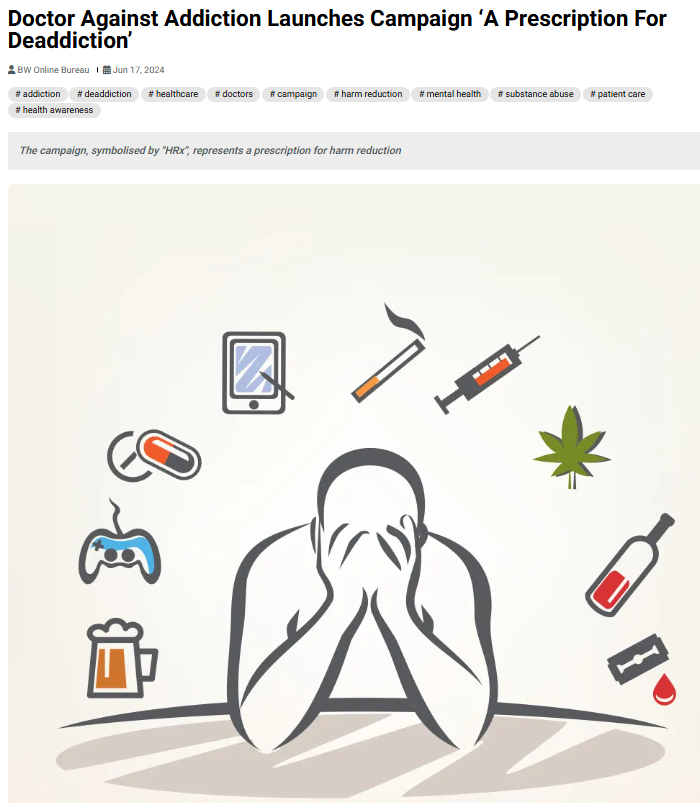
DaAD’s messaging has been amplified through a series of press releases targeting key milestones, including the 1,000-doctor signature threshold, and the launch of new initiatives within the campaign. Media coverage has highlighted the campaign’s innovative approach, garnering attention across high-impact channels, including ETHealthworld.com, Express Healthcare, Telangana Today, and NDTV.
(I) DaAD’s Press Release on new approach to combat growing addictions


Media Coverage links:
- https://health.economictimes.indiatimes.com/news/industry/campaign-involving-doctors-in-fight- against-addiction-launched- daad/110441829#:~:text=The%20campaign%20was%20launched%20under,’A%20Prescription%20for%2 0Deaddiction
- https://www.ptinecom/story/national/campaign-involving-doctors-in-fight-against-addiction- launched-daad/1533141
- https://www.drugtodacom/medical-news/news-topic/18804-campaign-launch-by-doctor- against-addiction-daad-a-prescription-for-deaddiction
- https://bwhealthcareworld.com/article/doctor-against-addiction-launches-campaign-%E2%80%98a- prescription-for-deaddiction%E2%80%99-523368
- https://biovoicenews.com/doctors-launch-a-prescription-for-deaddiction-campaign-to-combat- addiction/
- https://www.thein/wire-updates/national/2024/07/21/des15-health-tobacco-free-campaign.html
- https://timesofindia.indiatimes.com/india/doctor-led-campaign-to-make-india-addiction-free-garners- over-1000-signatures/articleshow/111902978.cms
- https://health.economictimes.indiatimes.com/news/industry/doctor-led-campaign-to-make-india- addiction-free-garners-over-1000-signatures/111905272
- https://www.deccanherald.com/amp/story/india/doctor-led-campaign-to-make-india-addiction-free- garners-over-1000-signatures-3114687
- https://indiamedtoday.com/doctor-led-campaign-nasha-mukti-indradhanush-abhiyan-india-aims-to- make-india-addiction-free/
- https://expresshealthcare.in/news/indias-tobacco-crisis-daad-survey-highlights-gaps-in-cessation-efforts- and-calls-for-safer-alternatives/446618/
- https://health.economictimes.indiatimes.com/amp/news/industry/65-healthcare-professionals-support-safer- novel-tobacco-alternatives-daad-survey/114588654
- https://mid-day.com/lifestyle/health-and-fitness/article/65-per-cent-indian-doctors-call-for-safer-tobacco- alternatives-to-save-lives-study-23418254
- https://ndtv.in/health/65-percent-of-the-countrys-health-professionals-are-demanding-safe-tobacco-alternatives- to-save-lives-survey-6873143
- https://telanganatoday.com/65pc-of-indian-doctors-urge-safer-tobacco-alternatives-amidst-growing-epidemic
- https://medgatetoday.com/65-of-healthcare-professionals-push-for-safer-novel-tobacco-alternatives-to-save-lives- daad-survey/
- https://wnewsnationtv.com/hindi-65-pc-indian-doctors-call-for-safer-novel-tobacco-alternatives-to-save-lives- study–20241025144854-20241025164216/
- https://bhaskarlive.in/65-pc-indian-doctors-call-for-safer-tobacco-alternatives-to-save-lives-study/
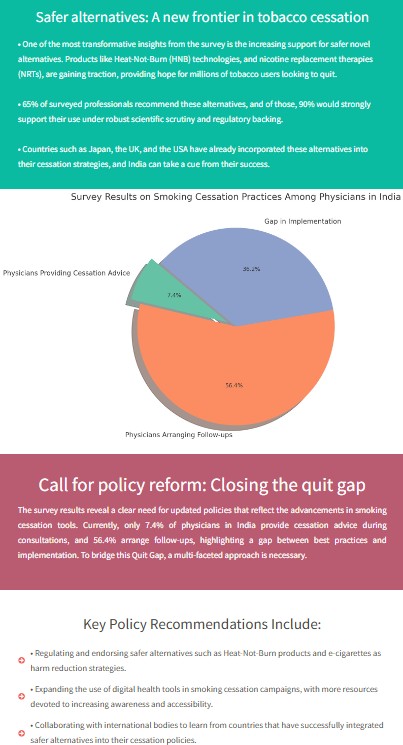
The QuitVice – Doctors Against Addiction (DaAD) Survey explored Indian healthcare professionals’ perspectives on tobacco cessation and alternative cessation methods. Involving over 1,200 professionals, the survey provides crucial insights into the challenges of smoking cessation and the potential of harm reduction to aid in de-addiction efforts.
Key Findings
Health Risks: 65% of healthcare professionals identified respiratory and cardiovascular issues as top concerns.
Quitting Barriers: Significant obstacles include addiction severity, motivation gaps, and a lack of accessible cessation tools.
Support for Alternatives: 65% of respondents support scientifically validated, safer alternatives like nicotine replacement therapies and heat-not-burn products.
This survey underscores the need for expanded smoking cessation resources and the importance of integrating harm-reduction alternatives to curb addiction rates in India.
Major Insights
Tobacco use epidemic: India is the second-largest consumer of tobacco worldwide. 4 in 10 Indian households have a smoker, highlighting the magnitude of the tobacco addiction problem.
Health risks: Smoking contributes to various critical diseases, with 65% of healthcare professionals citing respiratory and cardiovascular problems as primary concerns.
Quitting efforts: Over half of Indian smokers and smokeless tobacco users have attempted or considered quitting, yet significant barriers persist.
Lack of awareness: Only 20% of healthcare professionals are aware of mobile apps and online platforms that assist in smoking cessation, highlighting the need for greater awareness of digital cessation tools.
Key Statistics
India accounts for 40% of the world’s tobacco users, with China sharing a similar proportion.
Tobacco causes over 930,000 deaths annually in India, with an average of more than 2,500 deaths daily due to smoking-related diseases.
70% of healthcare professionals identified the severity of addiction and low motivation as the primary barriers to quitting smoking.
65% of surveyed professionals expressed support for novel cessation methods, such as Heat-Not-Burn products and nicotine replacement therapies, provided they are scientifically validated as safer alternatives.
Inference of the Survey
The survey reveals that smoking cessation remains a major public health challenge in India. Despite awareness of the dangers of smoking, significant barriers continue to hinder cessation efforts. The findings stress the need for an overhaul in both the policies and the resources dedicated to smoking cessation, including the adoption of novel alternatives and digital tools.
DaAD’s regular newsletters provide updates and insights to healthcare professionals, and representation letters sent to government bodies advocate for policy reforms to strengthen addiction management infrastructure.

The DaAD campaign has:
Enhanced Doctor Engagement:
Educated over 1,200 healthcare professionals on addiction management, cultivating a network of advocates.
Increased Public Awareness:
Heightened awareness through media exposure, community engagement, and digital outreach.
Influenced Policy Discussions:
Stimulated conversations on policy reform to enhance addiction management support. The initiative has set the foundation for ongoing addiction management improvements, with a significant number of healthcare professionals expressing commitment to incorporate harm reduction strategies into their practices.
Key Takeaway Messages Harm Reduction is Vital:
Effective addiction management must embrace harm reduction as a primary strategy, providing individuals with safer alternatives and a non-judgemental framework for recovery.
Policy Reform is Crucial:
The DaAD campaign underscores the need for policy changes that facilitate addiction management through accessible cessation resources, digital tools, and patient support networks.
Healthcare Professionals as Catalysts:
Doctors and healthcare providers play a key role in driving addiction awareness and fostering positive behaviour change within communities.
Data Drives Change:
Comprehensive data collection, as demonstrated by the QuitVice Survey, is critical in understanding the barriers to addiction cessation and in advocating for solutions that align with real-world challenges faced by both patients and professionals.
Compassionate Care Transforms Lives:
Addressing addiction with empathy and understanding, rather than stigma and judgement, can create an environment that encourages healthier choices and builds trust between patients and healthcare providers.
Inference
The Doctor Against Addiction (DaAD) campaign has made notable progress in reframing addiction as a health issue requiring compassion, harm reduction, and inclusive care. Through strategic initiatives, such as empowering healthcare professionals with specialised knowledge, conducting nationwide awareness campaigns, and influencing policy discussions, DaAD is transforming addiction management in India.
The campaign reveals a profound need for healthcare systems to prioritise harm reduction, utilise safer alternatives, and embrace technology as essential tools in the de-addiction journey. The engagement and support from healthcare professionals demonstrate that addiction management can evolve beyond traditional approaches, creating a model of patient care that is both non-judgemental and preventive.
Recommendations for Future Directions
Expand Educational Outreach:
Develop workshops and training programs for healthcare professionals focusing on digital cessation tools and harm reduction
Strengthen Policy Advocacy:
Further government collaboration to promote policy shifts toward inclusive addiction management.
Broaden Community Campaigns:
Extend DaAD’s reach by creating community-centric, culturally relevant campaigns.
Conclusion:
The Doctor Against Addiction (DaAD) campaign represents a pivotal shift in India’s addiction management landscape, promoting harm reduction and compassion in addressing a pressing public health issue. By empowering healthcare professionals, DaAD not only amplifies the voices of doctors but also instils hope for a healthier, addiction-free future. As the campaign progresses, its influence is set to foster long-term, sustainable health improvements for individuals and communities nationwide.
The DaAD campaign’s achievements reflect a powerful shift towards a healthcare model that values harm reduction, patient empowerment, and evidence-based practices, laying the foundation for an addiction-free future that prioritises both individual and societal well-being.