Sustaining the Quit: Long-Term Monitoring and Relapse Prevention with Safer Novel Alternatives


Welcome to Redefining Smoking Cessation!


Dear Healthcare Practitioner,

As India's tobacco crisis persists—with 267 million adults using tobacco products and contributing to 1.35 million deaths annually (WHO Global Tobacco Report 2025 — sustained cessation remains elusive, with relapse rates exceeding 75% within six months for unaided attempts (Cochrane Review Update 2025). While Safer Novel Alternatives (SNAs) have demonstrated 50-70% higher short-term quit rates in real-world evidence (RWE) from Sweden and Japan (European Journal of Public Health 2025, long-term success hinges on structured follow-up. This edition explores evidence-based monitoring strategies to prevent relapse, empowering you to guide patients toward permanent freedom.



Long-Term Relapse Risks: The Data Imperative
 
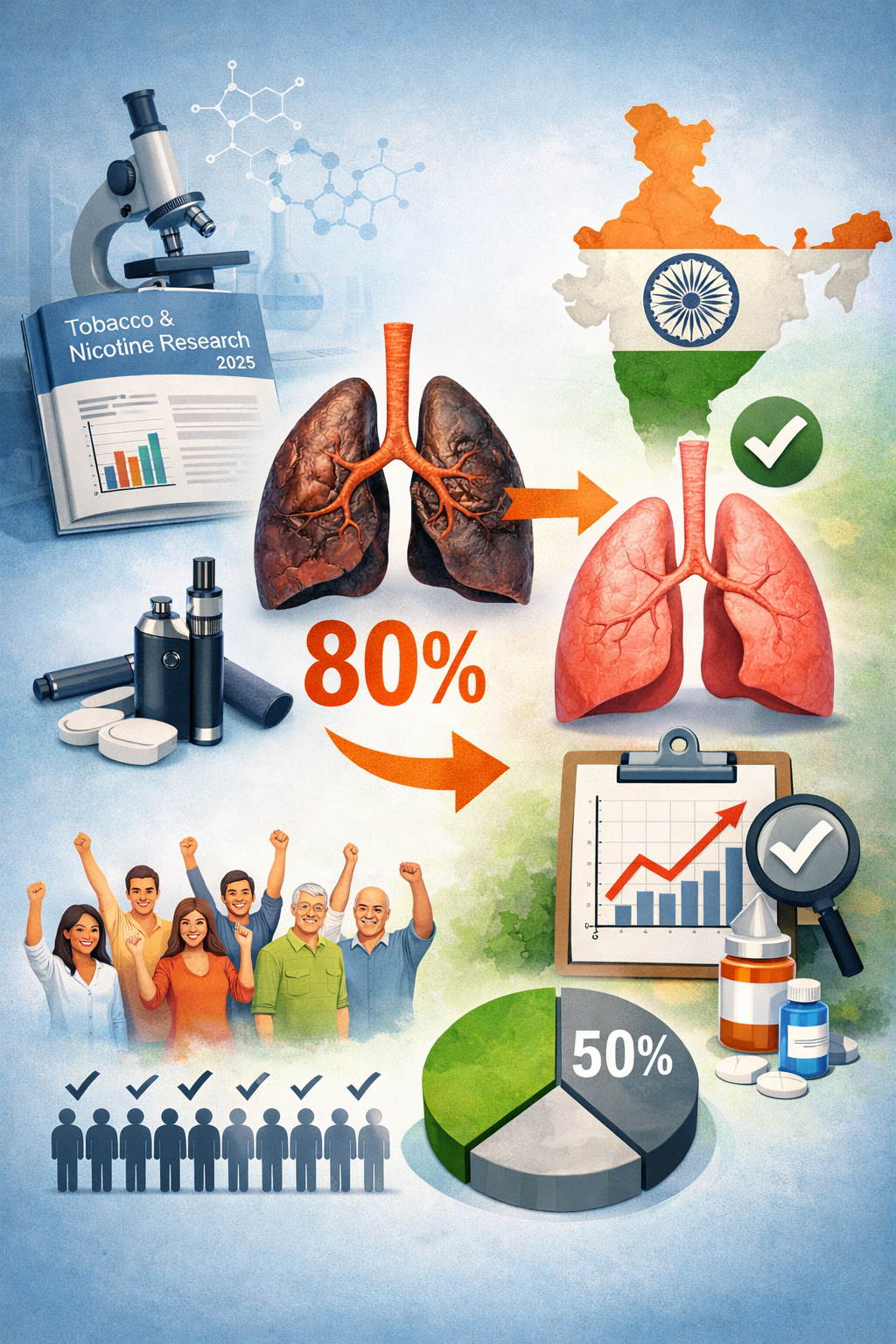
RWE reveals that while SNAs reduce biomarkers by up to 95% compared to combustibles (FDA Modified Risk Tobacco Product Review 2025, 60-70% of users face relapse without ongoing support (Nicotine & Tobacco Research 2025, In India, where 80% of quit attempts fail within the first month (GATS India 2022 Update, ICMR-NCDIR 2025 factors like stress (affecting 77% of urban adults, NFHS-5 2025) and social cues exacerbate risks. Studies show personalized follow-up—combining digital tracking and behavioural coaching—boosts 12-month abstinence by 40% (Harm Reduction Journal 2025.


Optimizing Follow-Up: Evidence-Led Protocols


Integrate RWE into practice: Monthly check-ins via apps show 35% higher retention (PMC Digital Cessation Tools Meta-Analysis 2025. For heavy users, gradual SNA tapering reduces relapse by 25% (European Respiratory Journal 2025. In the UK, where SNA adoption cut smoking prevalence to 12.9% (ONS 2025), HCP-led monitoring prevented 166,000 deaths by 2052 (Levy SimSmoke Model 2025). India can replicate this: Use tools like Meltwater for patient progress tracking, aiming for 70% adherence.


Relapse Prevention: Data-Driven Interventions
 
RWE from 22,000 users shows personalized reminders cut relapse by 45% (Harm Reduction Journal 2025). Incorporate biomarkers: Monthly checks reduce re-exposure risks by 30% (CDC Tobacco Surveillance 2025. For dual users (20% of attempters), strict transition protocols yield 50% success (Nicotine & Tobacco Research 2025). Challenge: India's 0.7% quit rate (Research Square 2025) – addressed via HCP apps for 60% craving reduction (PMC 2025).


Spotlight Study: Saini et al. (2025)
Recent RWE affirms SNAs cut COPD risks by 80% with sustained use (Contributions to Tobacco & Nicotine Research 2025).
For India, this means prioritizing long-term monitoring to achieve 50% abstinence.


Call to Action
Download our Long-Term SNA Toolkit | Join HEAL's January webinar: ‘Relapse-Proof Cessation: RWE Strategies.’